
Operational optimization in drinking water production
Online monitoring of organic loads in the water treatment plant Grmov vrh in Slovenia
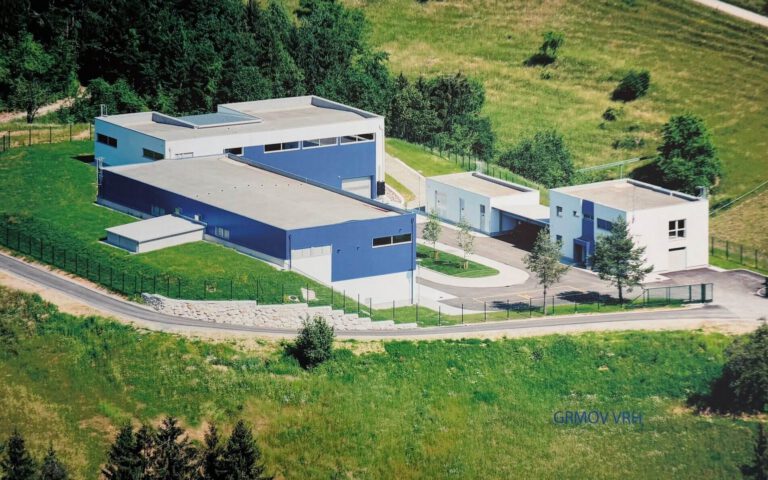
The Grmov vrh water treatment plant of the Public Utility Company Velenje SL has been in operation since 2015 and is a central component of the regional drinking water supply. Up to 120 L/s of surface water is extracted and treated from the Ljubija river via a pipeline around 6 km long. The catchment area is characterized by a near-natural environment, which means that anthropogenic influences are minimal. Nevertheless, natural organic substances pose a considerable challenge, especially during rain events: Humic substances can change the water color to a dark brown tone (“coffee brown”) and make treatment much more difficult.
Initial situation and challenges
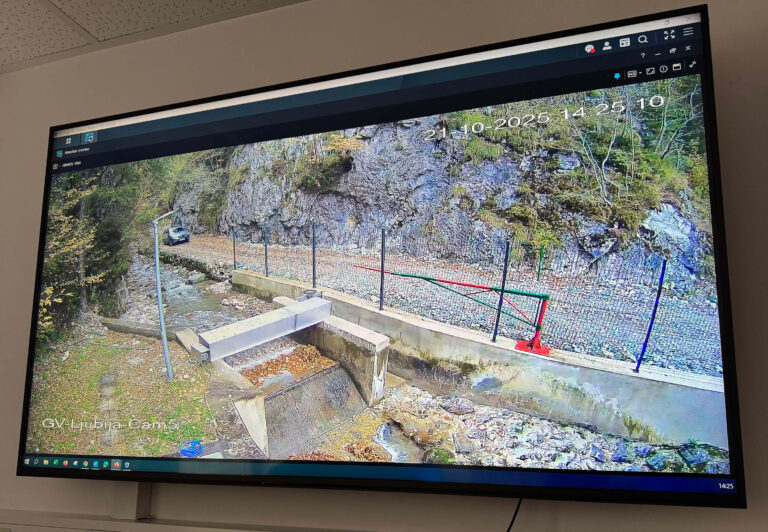
Turbidity is continuously monitored at the extraction point. In the event of extreme burdens, the raw water supply is interrupted as a precautionary measure to protect downstream processes.
Before the modernization in 2015, Treatment was carried out using hyperchlorination, coagulation and flocculation, rapid sand filtration, and dechlorination with activated carbon. However, this process could not guarantee consistently sufficient drinking water quality – especially with fluctuating organic burdens.
Modernisation of the treatment technology
The treatment concept was fundamentally optimized with the commissioning of the new plant. Flocculation is now only carried out as required: Dosing of coagulant FeCl3 and polymer is only activated in the event of increased turbidity (> 5 FNU), measured in the lamella settling tanks. This is followed by activated carbon filters as “police filters” before ultrafiltration (UF) is used as the central barrier.
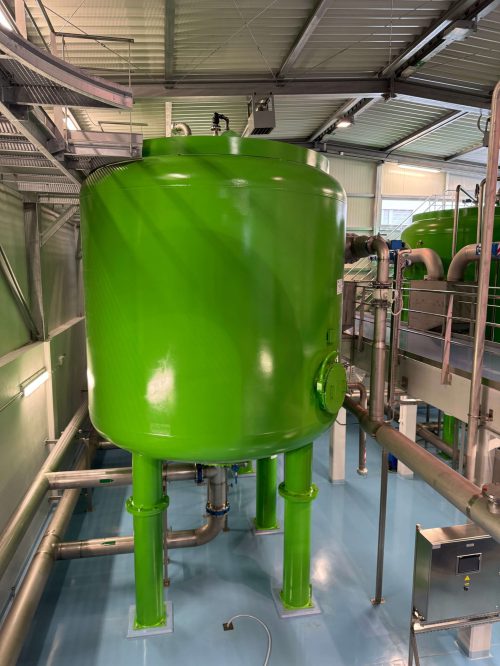
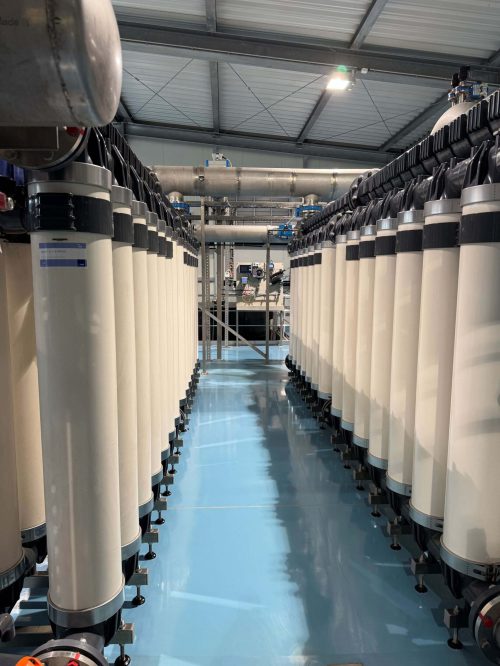
A decisive advance was also made in the extended online monitoring of organic substances. Originally, only the legal specifications for a final inspection after ultrafiltration were taken into account: Among other things, these stipulated the optical parameter SAC436 as an indicator for yellow-brown coloration.
On the initiative of the engineers of utility company Velenje (with Nataša Uranjek *), an additional SAC254 measurement was implemented. After extensive literature research, she recognized the importance of this parameter as a measure of the total organic load in water at an early stage.
Today – more than ten years later – the SAC value is also enshrined in law at a maximum of 0.5 1/m, and has established itself as an indispensable online parameter in Grmov vrh.
Use of modern online measurement technology
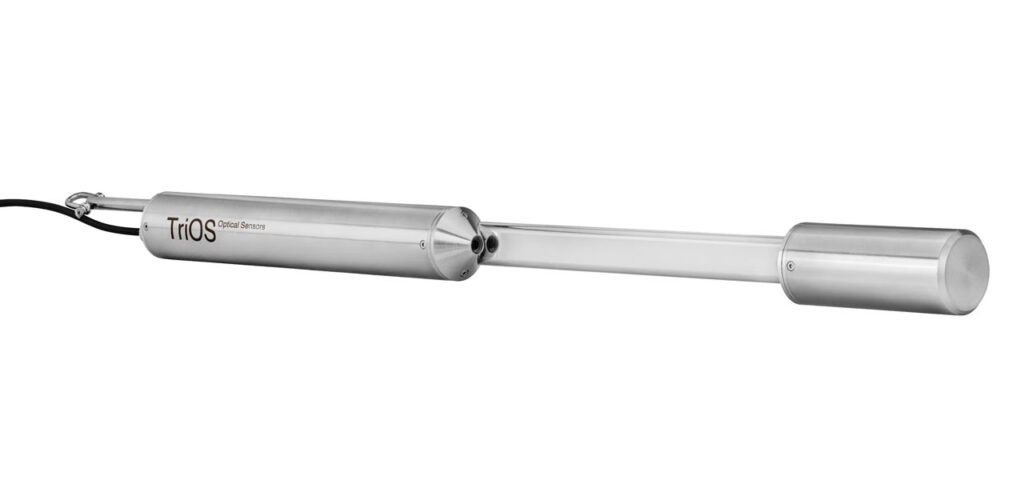
Two photometers from TriOS Mess- und Datentechnik GmbH were installed:
Photometer VIPER for color measurement (SAC436)
Photometer LISA UV for measuring total organic load (SAC254)
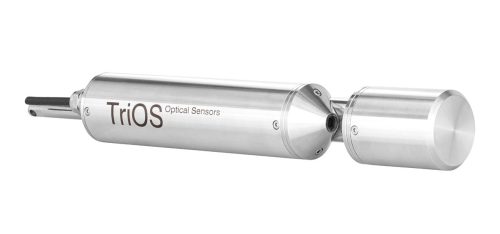
The two TriOS photometers are integrated into special flow cells and connected to TriOS controllers. The sensors have dirt-repellent nano coatings on the optical windows, which eliminates the need for automatic cleaning. The maintenance effort is correspondingly low.
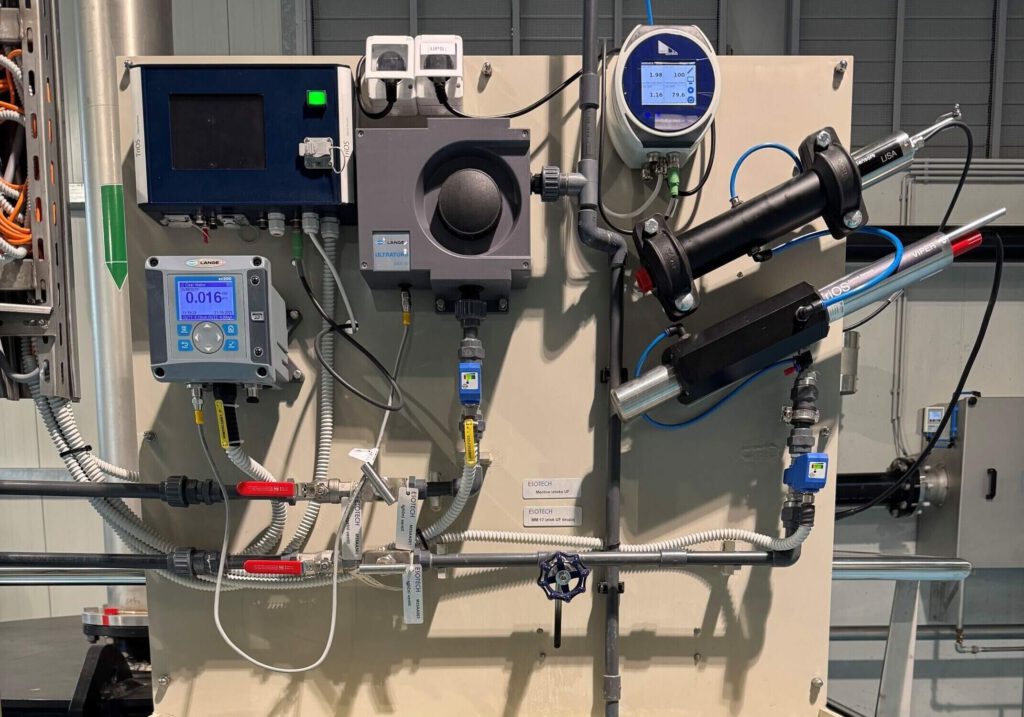
Monitoring after ultrafiltration – turbidity measurement, coloration (SAC436 by VIPER) and organic load (SAC254 by LISA UV)
Findings from plant operation
The added value of the SAC254 measurement became apparent early on in operation. After ultrafiltration, the drinking water is chlorinated before storage and the chlorine concentration is monitored online. However, laboratory analyses at the outlet to the distribution network repeatedly showed reduced chlorine levels. The loss of chlorine must therefore already take place in the storage tanks. Additional measurements showed that chlorine consumption increases significantly with increased SAC254 values, while the SAC436 did not provide any corresponding notice. The degradation of the chlorine was therefore mainly due to reactions with organic substances in the storage tanks.
Extreme events and process optimization
Another example underlines the relevance of the measurement: after a winter with little snow, a heavy rain event led to significantly increased SAC254 values. These presumably reflected increased concentrations of organic acids, for example from the decomposition of autumn leaves, which were not diluted due to the lack of snowmelt. As a result, the ultrafiltration system became blocked. This meant plant downtime, high maintenance requirements and high costs.
As a consequence, an automated adjustment of the cleaning strategy was implemented: if the SAC254 value rises above 4.0 1/m, the cleaning program of the UF system is adjusted to counteract deposits at an early stage.
Comparison and operating experience
As expected, Grmov vrh shows higher SAC254 values compared to the other two waterworks of the Velenje municipal utility that use groundwater – typically approx. 1.5 1/m after treatment, with SAC raw water values of up to 15 1/m. However, continuous online measurement enables precise process control and a quick response to changes.
The measuring systems used have proven to be extremely stable and reliable over more than ten years – without the need for regular calibration. Only occasional manual cleaning was necessary.
Conclusion
The use of online measurement technology, in particular the SAC254 probe LISA UV, has proven to be a decisive success factor in the Grmov vrh water treatment plant. It enables:
- Early detection of organic burdens
- Targeted control of the treatment processes
- Optimization of the disinfection strategy
- Protection of the ultrafiltration system
- Permanently good drinking water quality
Together with color measurement (SAC436), the system provides a comprehensive picture of the water quality and has been helping to make plant operation efficient, safe and sustainable for over a decade.
* Nataša Uranjek, B.Sc., is the Head of the Department for Technology and Control at the Public Utility Company Velenje, which specializes in drinking water supply, waste water treatment, and district heating management. Her passion for chemistry and engineering led her to study chemical engineering, where she combines theoretical knowledge with practical skills. Her responsibilities include monitoring water treatment and distribution, researching new technologies and consulting activities. As a member of the Slovenian Association for Water Protection, she is involved in the protection of water resources.