Detecting Oil in Marine Environments

Why TriOS leads the way
The 3 key highlights:
- Unsurpassed sensitivity and accuracy
TriOS sensors use UV fluorescence technology to detect even the slightest traces of oil (in the ppb range), outperforming conventional infrared methods. - Rugged construction for harsh marine conditions
Made of titanium for maximum corrosion resistance, equipped with anti-fouling solutions and designed for long-term use in remote locations. - Easy integration and low power consumption
The RS-485 Modbus RTU interface ensures seamless integration into existing systems, while the extremely low power consumption makes it ideal for solar-powered stations and autonomous platforms.
Introduction
Oil pollution in oceans and harbors poses significant environmental and economic risks. From major oil spills to routine shipping activities, hydrocarbons enter the marine environment and threaten biodiversity, fisheries and coastal communities. Early and accurate detection of oil is critical to mitigating these risks.
Global context
Strategic chokepoints such as the Strait of Malacca, Bab el-Mandeb and the Suez Canal experience immense oil traffic, which increases the likelihood of oil spills. National contingency plans such as Malaysia’s NOSCP emphasize the need for advanced monitoring technologies to complement aerial surveillance.
Why online measurements are important
Oil on the surface can be detected by remote sensing, but dispersed and dissolved hydrocarbons often elude visual detection. Continuous online monitoring at ppb levels provides an important safeguard that enables rapid response and compliance with environmental regulations.
Technology overview
UV fluorescence principle: Polycyclic aromatic hydrocarbons (PAHs) in oil absorb UV light and emit fluorescence. TriOS sensors measure this fluorescence to determine hydrocarbon concentrations with exceptional sensitivity.
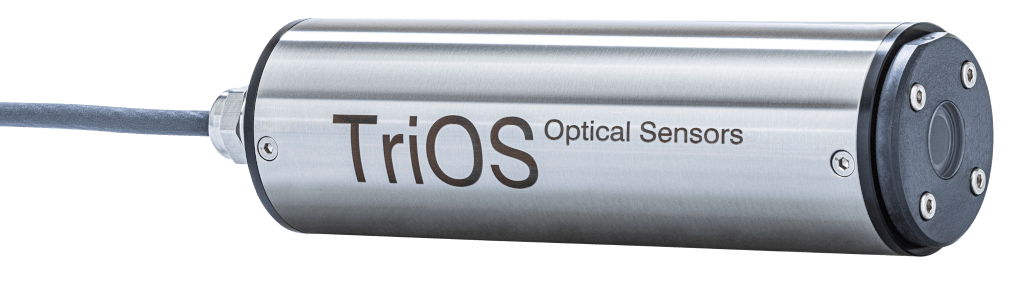
microFlu HC and enviroFlu sensors
- Detection of trace oil concentrations (ppb range)
- Factory calibrated with phenanthrene standard
- Automatic daylight compensation for reliable measured values
- Titanium housing for durability
- RS-485 Modbus RTU for easy integration
- Extremely low power consumption (ideal for solarpowered buoys and drones)
Application scenarios
- Buoy-based monitoring stations
- Harbor installations
- Offshore platforms
- Long-term use in remote areas
Innovations in the field of antifouling
- Nano coating on optical windows
- Biocide protection with copper tape
- Optional brush wipers for harsh environments
Conclusion
TriOS combines state-of-the-art technology, robust engineering and practical design to provide reliable oil detection solutions for marine environments. For dealers and end users, these sensors represent a proven investment in environmental protection and operational efficiency.