OPUS
Description
Versions
Downloads
Description
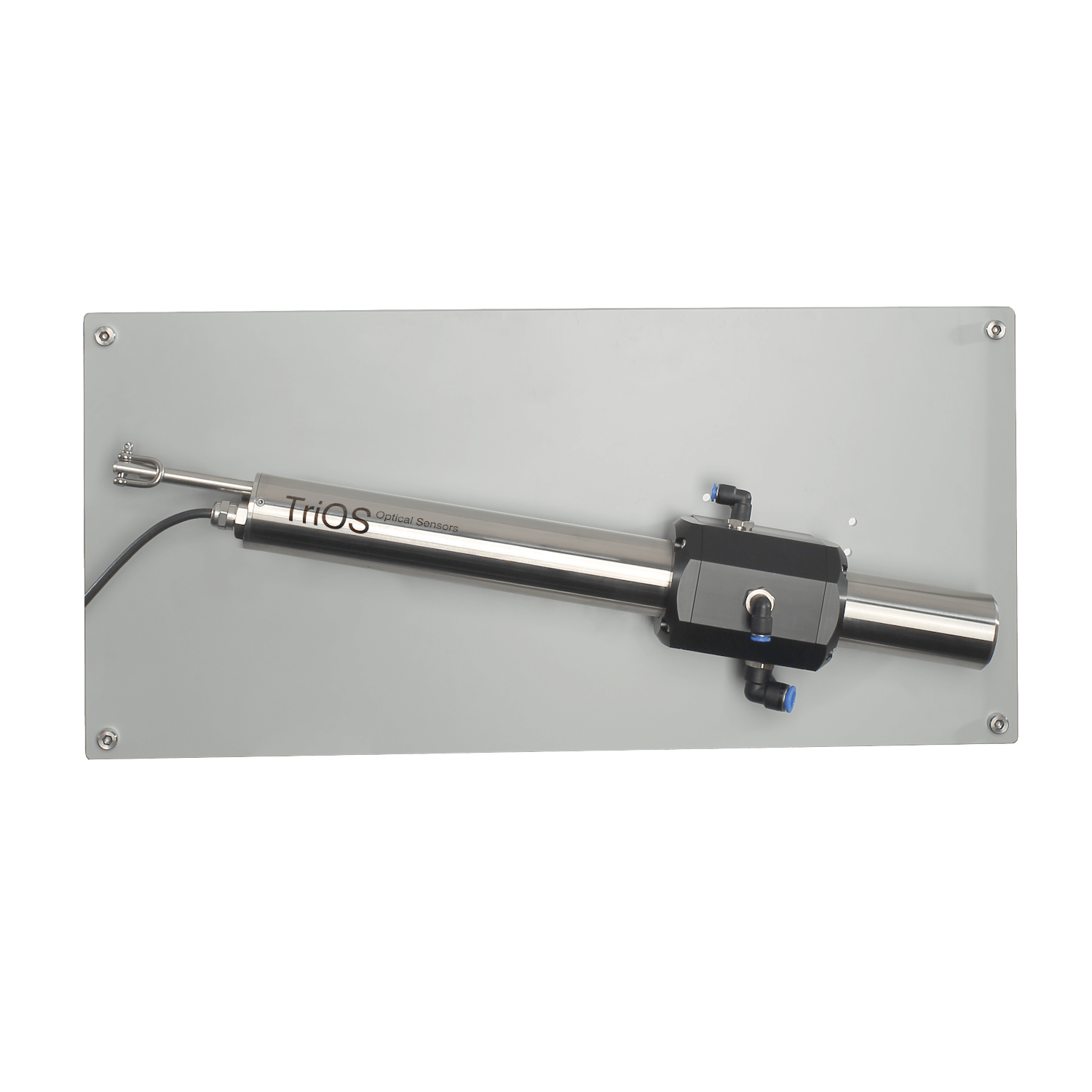
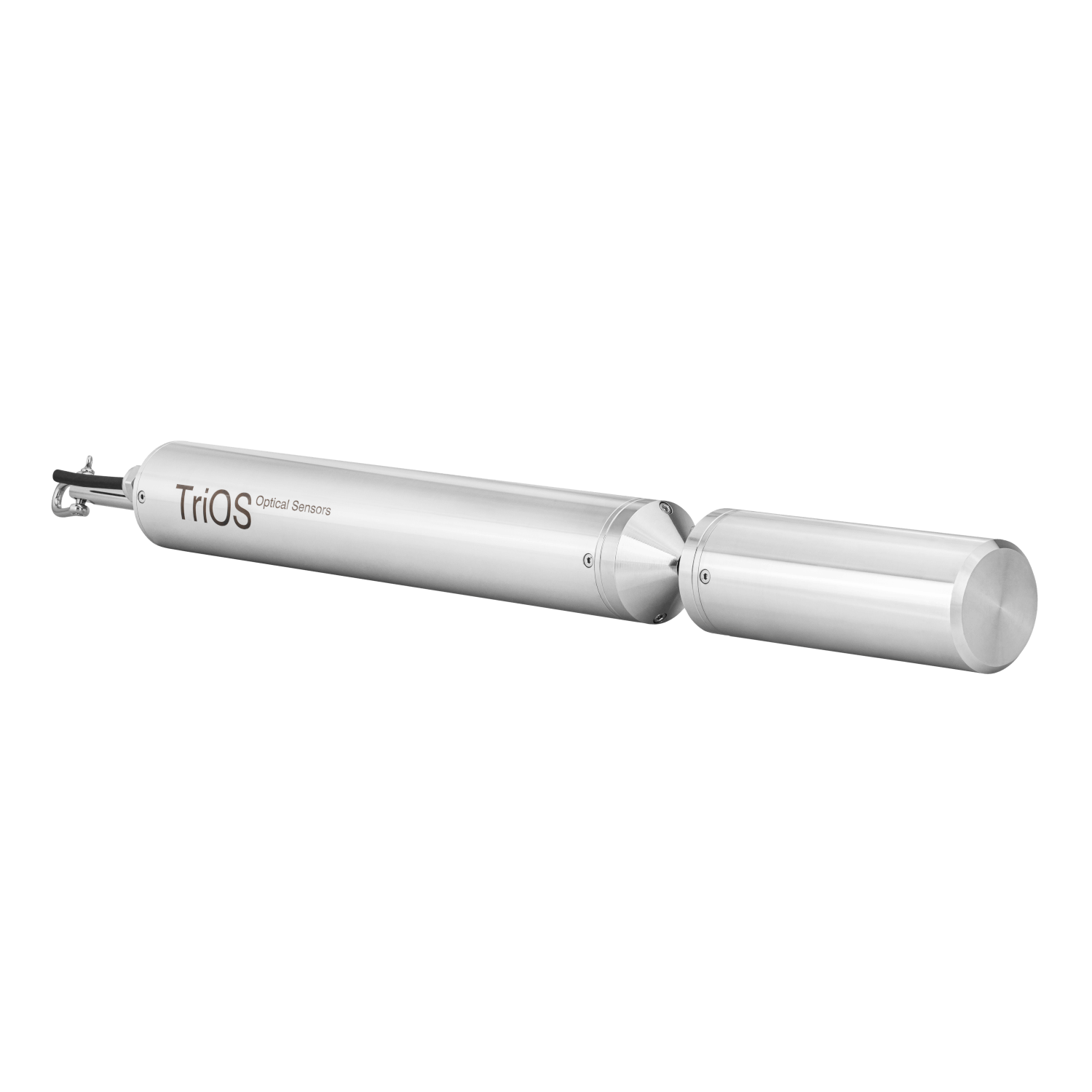
UV spectral sensor for online measurement of nitrogen and carbon with a resolution of 0.8 nm/pixel.
OPUS is the new generation of spectral probes for the online measurement of nitrogen and carbon compounds. By analyzing a complete spectrum, OPUS is able to provide reliable readings for N-NO3, N-NO2, organic compounds (CODeq, BODeq, DOCeq, TOCeq) and a range of other parameters.
OPUS is equipped with the new TriOS G2 interface, which enables simple and fast sensor configuration using a web browser. Integration into existing process control systems and external data loggers has never been easier.
Using WLAN, a laptop, tablet or smartphone can then simply be used for control without the need to install special application software or an app.
Versions
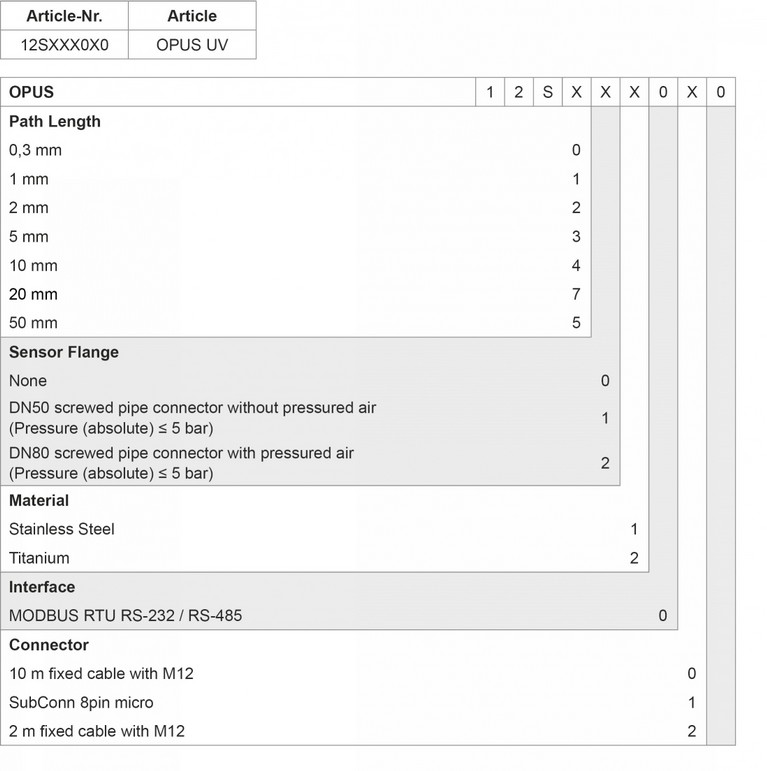
Downloads

OPUS
Benefits
- Without sampling and preparation of test samples
- Real-time sensor
- Without reagents
- Optical window with nano coating
- Pre-installed application calibration
Areas of application
- Sewage treatment plants
- Environmental monitoring
- Drinking water monitoring
- Industrial applications
Parameters
- NO3 / NO3-N
- NO2 / NO2-N
- CODeq
- BODeq
- DOCeq
- TOCeq
- TSSeq
- KHP
- SAC254
- COD-SACeq
- BOD-SAKeq
- SACeq
Frequently Asked Questions about OPUS
Here you will find the most important answers about the OPUS sensor, its functions, and its application areas
1. What is the OPUS spectral probe and what is it used for?
The OPUS spectral probe is a UV spectral sensor designed for online measurement of nitrogen and carbon compounds in water. It is used in wastewater treatment plants, environmental monitoring, drinking water control, and industrial processes. By analyzing a full UV spectrum, it provides accurate results without sampling or reagents.
2. Which parameters can the OPUS probe measure?
OPUS can measure a wide range of water quality parameters, including:
- NO₃ / NO₃‑N
- NO₂ / NO₂‑N
- CODeq, BODeq, DOCeq, TOCeq
- KHP, SAC254, COD‑SACeq, BOD‑SACeq, TSSeq
3. What are the advantages of OPUS compared to traditional measurement methods?
Key benefits include:
- No sampling or sample preparation required
- Real‑time measurement without reagents
- Nanocoated optical windows for reduced maintenance
- Pre‑installed application calibrations
- Easy configuration via web browser using the TriOS G2 interface
- Wireless control via laptop, tablet, or smartphone
4. How is the OPUS probe integrated into existing systems?
OPUS supports Ethernet (TCP/IP) and RS‑232/RS‑485 (Modbus RTU), allowing seamless integration into process control systems, SCADA environments, and external data loggers. Configuration is browser‑based and requires no additional software.
5. What are the key technical specifications of the OPUS probe?
Important technical details include:
- Light source: Xenon flash lamp
- Detector: Miniature spectrometer with 256 channels
- Spectral range: 200–360 nm
- Resolution: 0.8 nm/pixel
- Path lengths: 0.3–50 mm (depending on model)
- Protection class: IP68
- Power supply: 12–24 VDC
6. For which environments is the OPUS probe suitable?
OPUS is designed for demanding environments and operates reliably under:
- Sample temperatures from 0 to +55 °C
- Ambient temperatures from 0 to +55 °C
- Flow velocities from 0.1 to 10 m/s
- Pressure levels up to 30 bar (with Subconn connector)